
Ralph Bessard’s ‘The Root’ Explores Unhealed Trauma
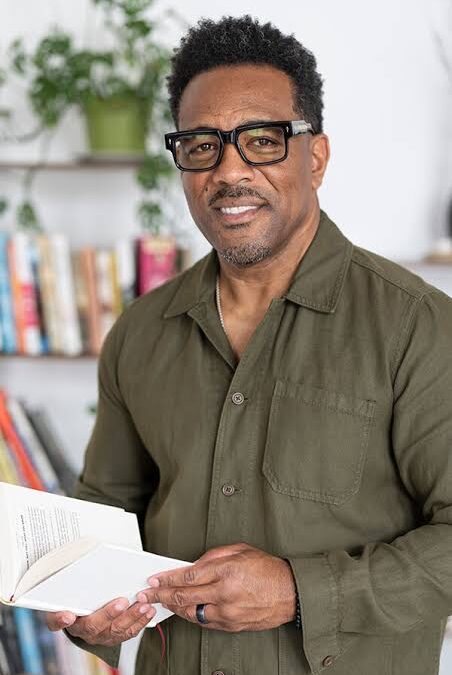
Author Ralph Bessard’s The Root: The Wound That Shapes the World was a runner-up in the 2026 Hollywood Book Festival nonfiction category.
Bessard is an entrepreneur, COO, senior pastor and motivational speaker whose overarching goal is to help individuals grow in knowledge and love, empowering them to discover their unique leadership style, purpose and fulfillment.
The Root explores unhealed trauma, which he defines as a global problem that has shaped our histories, politics and identities, fueling cycles of harm across generations and borders. His book invites us to see trauma not merely as pain to endure, but as a force we must understand—and heal. If trauma has shaped the world as it is, healing can shape the world as it should be.
Bessard answered a few questions on his book.
Q: When did you develop the philosophies that shape your book? Was there a triggering event?
A: The triggering event came from a conversation with my oldest son following the Hamas attack on Israel on October 7, 2023.
Like much of the world, I was trying to process the horror of what had happened. During our conversation, I found myself viewing the conflict largely from one side and using familiar language to identify who the terrorists were. My son challenged me. He told me not to become intellectually or morally lazy by choosing a side too quickly and letting a label do all my thinking for me.
He was not suggesting that the murder of civilians becomes acceptable when viewed from another perspective. An atrocity remains an atrocity, regardless of who commits it or what history preceded it. His challenge was more difficult than that. He was asking whether the moral language I applied to one group was language I was also willing to apply to people with whom I identified. Was I examining the act itself, or had I allowed allegiance to determine whose violence required explanation and whose violence required only condemnation?
That conversation disturbed me in the most necessary way.
The word terrorist may accurately describe particular acts and organizations. But it can also become a stopping place for thought. Once we have applied the label, we may decide there is nothing left to understand. We no longer have to ask what happened before the violence, what wounds were inherited, what grievances were exploited, or how people became capable of doing something most of us insist we could never do.
Understanding those things does not create moral equivalence, and it does not excuse the harm. Understanding helps us identify the path that led to the harm. If we refuse to examine that path, we may condemn the outcome while leaving everything that produced it untouched.
That sent me down what I can only describe as a rabbit hole. I began studying human woundedness more deeply, not simply as a response to war or political conflict, but as a force operating within families, relationships, organizations, communities, and individual lives. I started asking what lives beneath our anger, our fear, our need for control, and our ability to justify the pain we inflict upon others.
Eventually, the investigation turned toward me. I had to confront how my own wounds shaped how I led, loved, protected myself, interpreted other people, and responded when I felt threatened or unseen.
That became the initial premise of The Root: much of what we call behavior is fruit. If we want to understand why people hurt one another and if we genuinely want transformation, we must be willing to go beneath what is visible and examine the root from which that behavior grows.
Understanding the root does not absolve the person. It reveals what we must confront if we intend to interrupt the harm rather than merely condemn it after it happens.
Q: What did you hope to accomplish with your book? Any success stories to share?
A: I wanted The Root to help people ask a better question about their lives.
We are often taught to ask, “How do I stop doing this?” That is an important question, but it may not take us far enough. I want readers to ask, “What is still hurting in me that makes this behavior feel necessary?”
People learn how to manage anger, conceal insecurity, perform confidence, remain productive, and keep moving. Those strategies may help us function. They can also keep a wound active beneath a very successful life.
The most meaningful responses have come from readers who told me that the book gave language to something they had carried but had never been able to name. Some began reconsidering childhood experiences. Others saw patterns affecting their marriages, parenting, work, or leadership. The behavior that frustrated them began to make sense when they understood what it had once helped them survive.
The Root was named runner-up at the Hollywood Book Festival. I am deeply grateful for the distinctions But the success that matters most occurs when someone realizes that what happened to them may have shaped their story without having to control the rest of it.
The response to the book also inspired The Healing Table, a guided curriculum designed to help people work through these questions in community. Writing the book confirmed something I have witnessed throughout my life: healing may begin privately, but its effects rarely remain private.
Q: There are studies indicating that trauma can be passed down through generations through epigenetics. What role does that play in your philosophy?
A: It supports an important part of my philosophy, although I approach the science carefully.
Research has identified associations between trauma or severe stress and biological changes that may affect later generations. The evidence for stable transgenerational epigenetic inheritance in humans is still developing, and I would not claim that science has conclusively proved something it is continuing to investigate. We know more confidently that trauma moves through families in several ways at once, through the body, family relationships, economic conditions, learned behavior, silence, fear, and the survival strategies adults pass to children.
A child can inherit a parent’s vigilance without inheriting the event that made vigilance necessary.
The child may learn to scan every room, distrust authority, conceal emotion, or prepare for abandonment without ever being told where that fear began. Sometimes a family passes down a rule: never cry, never depend on anyone, never tell outsiders what happens here. The generation repeating the rule may no longer remember who first needed it.
Epigenetics offers a possible biological dimension to something human beings have recognized for a long time: an experience can outlive the person who first endured it. But that should never become a doctrine of inevitability. We are influenced by what we inherit; we are not sentenced to repeat it.
That is where healing becomes larger than the individual. When I confront what was handed to me, I am deciding what I will hand to my children and to the people shaped by my presence. Current research supports taking intergenerational effects seriously while remaining cautious about claiming definitive epigenetic transmission in humans.
Q: Are you, in essence, arguing for a world without hatred?
A: Not in the sense that I believe we can remove every hateful feeling from the human experience.
I am arguing that hatred does not have to become our inheritance.
Hatred can make a wounded person feel protected. It can provide a target for pain that has nowhere else to go. It may create belonging among people who have decided they share the same enemy. If we address only the hatred, we may miss the wound feeding it.
That does not make hatred harmless. Understanding its root should make us more capable of confronting what it produces.
I want a world in which fewer people require hatred to hold themselves together and in which we can oppose evil without needing to surrender our own humanity to do it.
Q: What role does jealousy play in your worldview?
A: Jealousy often reveals the place where identity has become comparison.
It tells us that another person’s success, attention, opportunity, influence, or happiness has begun to feel like evidence that something is missing in us. The problem is rarely that someone else possesses something good. The wound is in the meaning we assign to their having it.
Jealousy asks, “What does their success say about me?”
If I have not settled the question of my own worth, someone else’s elevation may feel like my diminishment. I may begin needing them to fail so I can feel secure. I have seen that impulse damage families, friendships, churches, businesses, and communities. It may never announce itself as jealousy. It may disguise itself as criticism, discernment, competition, or concern.
But jealousy can become useful information when we are willing to examine it. It may expose an unacknowledged desire or a place where we have surrendered our identity to comparison. The goal is not to shame ourselves for feeling it. The goal is to understand why another person’s flourishing has become threatening.
Q: What is your take on transgender people?
A: My take on transgender people is that they are people, and I refuse to begin anywhere else.
I am uncomfortable with the way this question is often framed because it can make a human being sound like a position the rest of us are entitled to approve or reject. Transgender people are living lives, building relationships, loving families, seeking belonging, and trying—as all of us are—to understand themselves and move through the world honestly.
As a Christian and a pastor, I believe identity ultimately begins with God. But I am not convinced that our religious interpretations have always made sufficient room for the complexity of human experience. Theology is sacred, but our interpretations of theology remain human. History should humble us about how often people have used their understanding of God to draw boundaries that love later required them to cross.
What concerns me most is the political demand that everyone choose a side, accept a label, and form an opinion about people they may have never taken the time to know. The debate becomes so loud that the person disappears. We begin defending positions while actual human beings absorb the consequences of our certainty.
I do not begin with the assumption that I am in disagreement with transgender people. I begin with curiosity, humility, and respect. I want to understand the journey a person has traveled, the life they are seeking to live, and what it has cost them to live it. Their experience does not threaten mine. The way they express themselves does not diminish my identity.
Ultimately, I believe the quality of our lives will be measured by how truthfully we lived and how deeply we loved ourselves and one another. Love does not require sameness. It makes room for difference without turning difference into distance.
I am called to love people with deep resolve. That means refusing to reduce anyone to a category, a theological problem, or a political argument. People who are committed to love will find a way to make room for one another, even when every question has not been settled, and every life does not look the same.
Q: What media outlets do you believe do a good job of being balanced?
A: I do not trust any single outlet so completely that I stop comparing sources.
For straightforward reporting, I generally respect Reuters and the Associated Press. I also value PBS and FRONTLINE when I need more depth and context. These organizations publicly emphasize accuracy, independence, fairness, and accountability in their editorial standards.
Still, perfect neutrality does not exist. Every newsroom decides what to cover, which voices to include, and how much context to provide.
The most balanced media habit may be a balanced reader, someone who examines information that confirms what they believe with the same scrutiny they apply to information that challenges it.
Q: What are your thoughts on cancel culture in social media?
A: Cancel culture begins with a legitimate demand: people and institutions must be accountable when they cause harm, particularly when their power has protected them from consequences.
The trouble begins when accountability becomes public destruction.
Social media rewards immediate judgment. It encourages us to form conclusions before facts have fully emerged and to demonstrate our virtue by joining the punishment. The crowd can begin experiencing someone else’s destruction as participation in justice.
Consequences may be necessary. Removing someone from authority may be necessary. Forgiveness does not automatically restore trust, access, employment, or leadership. People who have been harmed should not be required to make themselves vulnerable again simply to prove they are forgiving.
But accountability should remain connected to truth, proportion, and the possibility of change. If admitting wrongdoing leads only to permanent exile, people will become better at hiding rather than more willing to heal.
I am also wary of how easily cancellation recreates the very behavior it claims to oppose. A group declares someone unworthy of human consideration, then bonds over permission to treat that person without mercy. The names change. The wound does not.
Q: How do AI and the ability to manipulate information play into your philosophy?
A: I use artificial intelligence, so I cannot answer this honestly from the position of an outsider.
AI has helped me research questions, organize information, test arguments, and examine my writing. It can be a valuable collaborator. But I have also learned that it can produce something polished but inaccurate, something persuasive but lacking wisdom, and language that sounds profound without having been lived.
That places responsibility back on me. AI cannot become the source of my convictions, the owner of my voice, or a substitute for moral judgment. I must decide whether what it produces is true, whether it sounds like me, and whether I am willing to take responsibility for putting my name beneath it.
The larger danger is manipulation. We are entering a time when images, voices, and events can be manufactured convincingly and distributed before most people know they should question them. But manipulated information does not enter an empty space. It looks for fear, anger, resentment, loneliness, and confirmation. The technology creates the material; the wound makes us ready to believe it.
That is why I do not see AI primarily as a technological question. It is a human one. We are building tools that extend whatever is already directing us. If wisdom and character do not grow alongside our technical power, AI will magnify our wounds faster than we can recognize what they are producing.
Q: How do you feel about alcoholism and drug addiction?
A: I see addiction as a form of bondage that often begins as an attempt to survive.
Alcohol or drugs may initially quiet pain, anxiety, trauma, loneliness, or shame. What offers temporary relief can eventually begin controlling the person seeking it. The consequences spread into the body, family, judgment, finances, relationships, and future.
Shame rarely heals addiction. Calling someone weak, immoral, or hopeless may deepen the pain from which they are trying to escape. Compassion, however, cannot require everyone around the addicted person to cooperate with destructive behavior. Families need boundaries. Harm requires accountability. Recovery may require medical care, treatment, therapy, spiritual community, support groups, and a change of environment.
One of the most important questions we can ask is, “What has the substance been doing for this person?” What pain does it quiet? What memory does it interrupt? What becomes unbearable when they are sober?
That question does not replace treatment. It helps us understand why removing the substance without tending to the wound can leave a person exposed to the same pain with no new way to carry it.
The addicted person is not beneath us. Their struggle may simply be more visible than the ways the rest of us have learned to escape.
Q: Is diversity a strength or the root cause of conflict?
A: Diversity is not the root cause of conflict. Difference is a human reality. Conflict grows from what our wounds teach us to believe difference means.
People who feel threatened, unseen, or uncertain of their place may interpret difference as danger. We begin assigning value to distinctions in race, culture, religion, gender, nationality, education, and class. Then we treat the hierarchy we created as though it emerged naturally from the difference itself.
Diversity can be an enormous strength because people formed by different experiences notice different things. They identify risks, questions, and possibilities that a more uniform group may never see. But bringing different people into the same room does not automatically create wisdom. If people are present but never heard, diversity becomes decoration.
It becomes a genuine strength when their experiences are allowed to influence what the room decides and what the institution becomes.
The work is not to erase differences. It is to heal whatever makes another person’s difference feel like a threat to our own place in the world.